
Porcelain vs Polished Concrete for South Florida Floors
By Danova Renovations
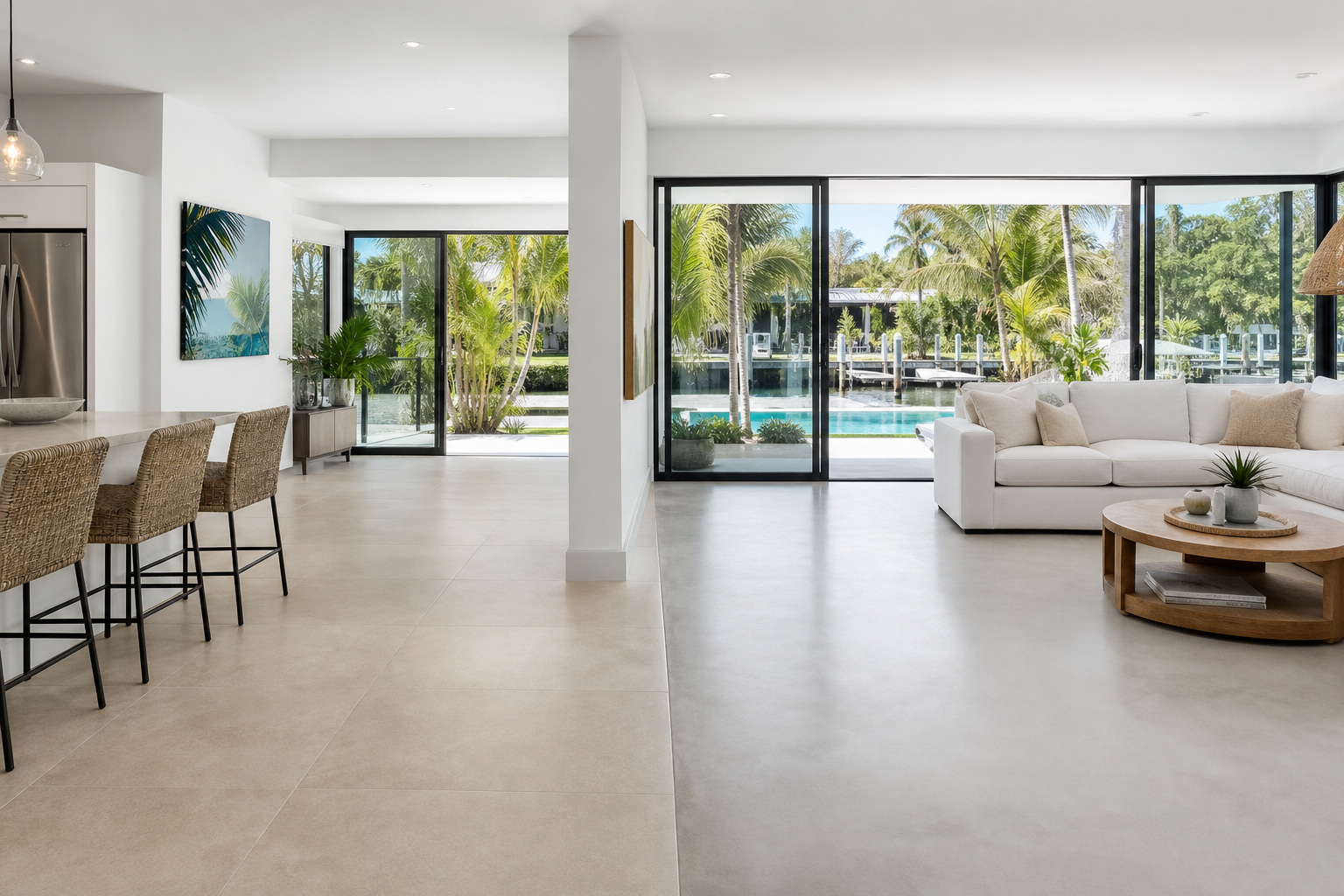
South Florida homeowners are asking for floors that look upscale, clean easily, and survive humidity without constant maintenance. In Fort Lauderdale, Miami, Davie, Hollywood, Dania Beach, and Miramar, two options come up often during whole-home refreshes: large-format porcelain tile and polished concrete.
Both can look modern. Both handle coastal living better than carpet or standard hardwood. The right choice depends on your slab, budget, comfort preferences, resale goals, and how much construction disruption you can tolerate. Danova Renovations helps homeowners compare the full system, not just the sample in a showroom.
Why these floors are trending in South Florida
Large-format porcelain is popular because it creates a clean, continuous look with fewer grout lines. Warm beige, limestone-look, and soft marble-look tiles fit the brighter paint palettes many Miami and Fort Lauderdale homeowners want in 2026. Porcelain also stays cool underfoot in rooms with big sliders and strong afternoon sun.
Polished concrete appeals to homeowners who want a minimalist, gallery-like floor. It can work especially well in ground-floor homes, converted garages, studios, and modern open plans where the existing slab is sound. It also pairs nicely with white walls, black metal accents, and natural wood cabinetry.
Both finishes are only as good as the preparation underneath. South Florida slabs can have moisture vapor, cracks, old thinset, paint overspray, and uneven patches from past renovations.
Comparison: porcelain tile vs polished concrete
| Priority | Large-format porcelain tile | Polished concrete |
|---|---|---|
| Moisture performance | Excellent when installed with the right thinset, grout, and movement joints. A strong fit for kitchens, entries, and bathrooms. | Good when the slab is dry enough and properly sealed, but moisture vapor can cloud sealers or cause maintenance issues. |
| Look and design range | Huge selection of stone, terrazzo, concrete, and wood-look styles. Fewer grout lines with 24x48 or larger formats. | Sleek and continuous, but color depends on the existing slab, aggregate, patches, and stain response. |
| Comfort | Cool, hard, and durable. Area rugs help soften living rooms and bedrooms. | Also hard underfoot, but visually warmer when honed to a satin finish instead of a high gloss. |
| Maintenance | Sweep and damp mop. Grout needs periodic cleaning and may need sealing depending on the product. | Dust mop and use neutral cleaners. Resealing or burnishing may be needed as traffic patterns develop. |
| Install disruption | More material handling, cutting, leveling, and grout timing. | Heavy grinding creates dust and noise, so containment matters. Existing slab flaws may stay visible. |
| Best fit | Homes wanting predictable design, wet-zone durability, and broad resale appeal. | Homes with a good slab, modern styling, and owners who like natural variation. |
How Danova evaluates the floor before recommending either
First, we look for slab cracks, hollow spots, previous adhesive, and moisture signs near sliders, laundry areas, and bathrooms. Older flooring layers can reveal patchwork that changes the plan.
Second, we discuss the rooms being renovated. Porcelain is often the safer pick for kitchens, bathrooms, laundry rooms, and pool-adjacent entries. Polished concrete can be compelling for living rooms, offices, garage conversions, and lower-traffic modern spaces when the slab is a good candidate.
Third, we coordinate the flooring with paint, trim, and baseboards. Large-format tile often looks best with crisp white or warm greige walls and freshly painted baseboards. Polished concrete may need a warmer wall color, updated lighting, or new doors so the room feels intentional instead of unfinished.
ROI, resale, and daily living
For resale, porcelain usually gives buyers the easiest signal: durable, waterproof, and move-in ready. That matters in coastal markets where homeowners worry about humidity, pets, sand, and cleaning. Polished concrete can also photograph beautifully, but it is more taste-specific. In a high-end Miami listing it can feel architectural. In a traditional Davie family home it may feel too commercial unless the rest of the design supports it.
Daily maintenance should guide the decision as much as style. If you want the fewest surprises, porcelain is more predictable. If you value a seamless custom look and accept slab variation, polished concrete may be worth exploring.
Frequently Asked Questions
- Is polished concrete waterproof? The concrete itself handles moisture, but sealers and slab vapor still matter. A moisture check should happen before polishing.
- Does porcelain tile crack in Florida homes? Quality porcelain is very durable, but slab movement can crack tile if prep, leveling, or movement joints are skipped.
- Which floor is better for pets and kids? Porcelain is usually the more forgiving choice because it resists scratches and stains well. Polished concrete can work, but sealer maintenance is important.
- Can I use both materials? Yes. Some homeowners use porcelain in wet zones and polished concrete in a studio, office, or garage conversion. Transitions need to be planned early.
If you are comparing porcelain tile and polished concrete for a Fort Lauderdale or Miami renovation, Danova Renovations can inspect the slab, explain the prep, and recommend a floor that fits your home instead of forcing a trend. Request a free estimate from Danova Renovations to get a practical flooring plan for your South Florida project.