
Polished Concrete vs Porcelain Tile for Florida Floors
By Danova Renovations
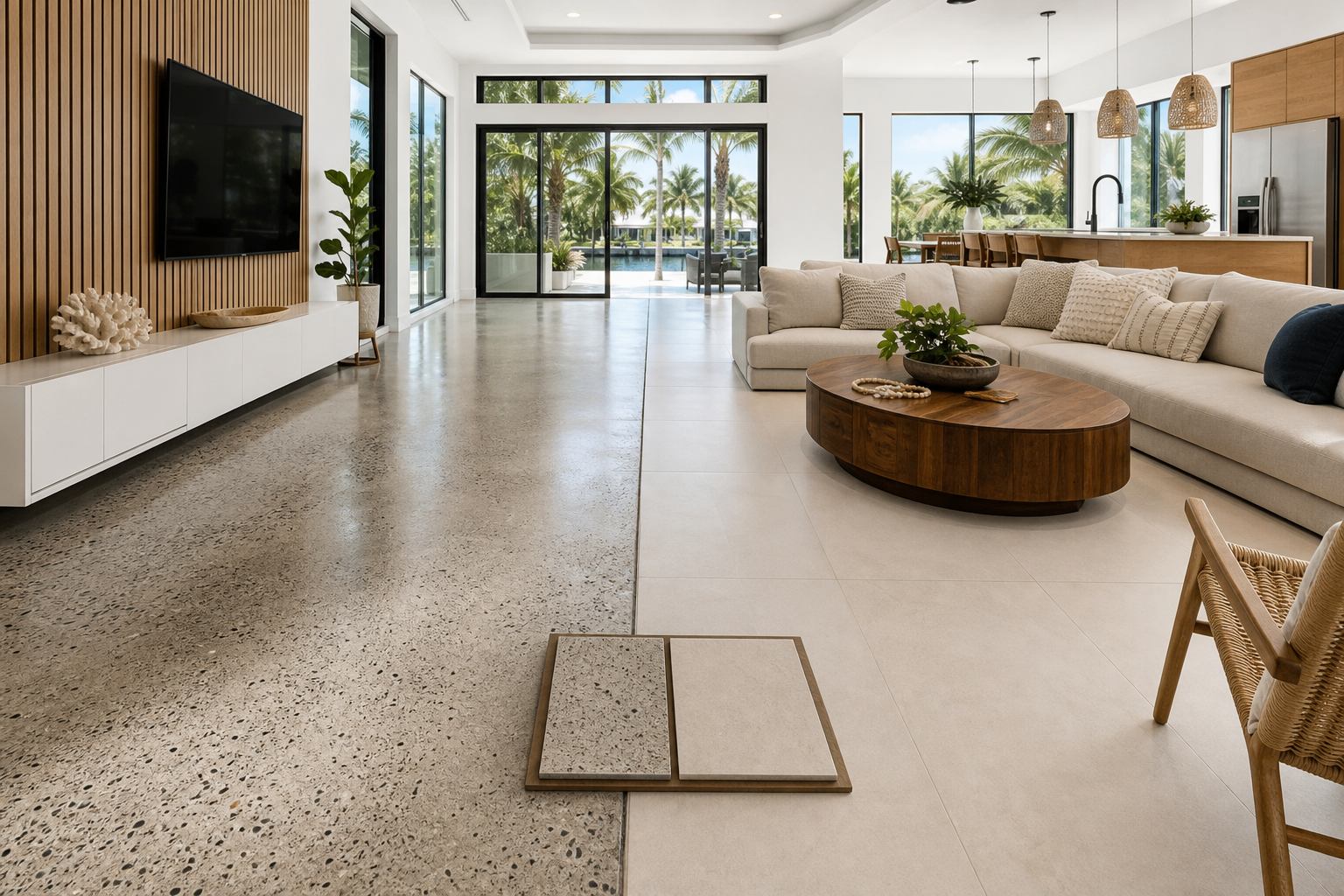
Fort Lauderdale, Miami, Davie, Hollywood, Dania Beach, and Miramar homeowners are asking for floors that look clean, handle humidity, and do not turn into a maintenance project every weekend. For many slab-on-grade South Florida homes, that conversation now comes down to polished concrete vs porcelain tile.
Both can work beautifully. Porcelain tile is familiar, durable, and design-flexible. Polished concrete is seamless, modern, and appealing to homeowners who dislike grout lines. The smarter choice depends on the existing slab and how the home is used.
Why South Florida slab floors need extra planning
Florida homes often sit on concrete slabs that can move moisture upward, especially after heavy rain, irrigation overspray, plumbing leaks, or long humid stretches. Before Danova Renovations recommends any hard-surface flooring, we look at slab condition, cracks, previous adhesives, door heights, baseboards, transitions, and whether the home has active moisture issues.
That inspection matters because neither option should be treated as a shortcut. Polished concrete needs a slab worth exposing and refining. Porcelain tile needs a flat substrate, correct mortar coverage, movement joints, and grout that can be maintained in humid rooms. Good prep is what separates a floor that photographs well on day one from a floor that still feels solid years later.
Comparison: polished concrete vs porcelain tile
| Priority | Polished concrete | Porcelain tile |
|---|---|---|
| Best fit | Modern open-plan homes, ground floors, rental properties, and owners who want no grout lines. | Kitchens, baths, entries, traditional interiors, and homes where buyers expect a classic finished floor. |
| Humidity handling | Uses the existing slab, so moisture testing and surface prep are critical before polishing. | Tile is highly moisture resistant, but grout lines and movement joints need proper installation and care. |
| Maintenance | Dust mop and damp mop with a neutral cleaner. No grout cleaning. | Easy to clean tile faces, but grout can stain, darken, or need periodic refreshing. |
| Comfort | Cool, hard, and sleek. Area rugs help in bedrooms and living rooms. | Also hard and cool, but texture and grout lines can add grip in wet areas. |
| Design flexibility | Depends on the character of the slab, aggregate exposure, sheen level, and optional stain. | Huge range of colors, sizes, patterns, stone looks, and slip-resistant finishes. |
| When Danova recommends it | When the slab is sound and the homeowner wants a seamless, low-maintenance, contemporary floor. | When the room needs a specific design style, wet-zone traction, or broad resale familiarity. |
Where each flooring choice makes sense
Polished concrete can be a strong fit for open living areas, kitchens, home offices, and Florida rooms where sand, pets, and pool traffic are part of daily life. It pairs well with fresh white walls, warm wood cabinets, black hardware, and simple baseboards. In many South Florida homes, it can make a smaller room feel brighter because the surface reflects light without adding pattern.
Porcelain tile is often better when the design calls for a specific finish: limestone look, terrazzo look, warm beige stone, coastal white, or a slip-resistant bathroom surface. It also works well when the existing slab has too many patches, stains, or repairs to polish attractively. Large-format tile can create a clean look, but it still needs a flat substrate and careful layout so cuts do not look awkward at sliders, kitchen islands, or hallway transitions.
Budget, ROI, and maintenance questions
Installed cost varies by slab condition, tile selection, demo needs, furniture moving, and how much leveling or repair is required. Instead of choosing by square-foot price alone, compare total ownership. Polished concrete may reduce long-term grout maintenance, but it can expose slab flaws that require patching or a different finish plan. Porcelain tile may cost more in labor and setting materials, but buyers in Fort Lauderdale and Miami already understand it and often view it as a durable upgrade.
For resale, the safest choice is the one that matches the home. A waterfront condo with contemporary cabinetry may benefit from polished concrete. A family home in Davie or Miramar may photograph better with warm large-format porcelain that feels more traditional. Danova keeps the recommendation practical: choose the floor that handles the climate, supports the design, and will be easy for the next owner to maintain.
Frequently Asked Questions
- Is polished concrete waterproof? It is moisture-tolerant when properly prepared, densified, and guarded, but the slab still needs evaluation before work starts.
- Does porcelain tile prevent moisture problems? Tile handles water well, but grout, perimeter joints, and the slab below still need proper installation details.
- Which floor is easier to clean? Polished concrete usually wins for simple daily cleaning because there are no grout lines. Tile is also easy, but grout needs more attention.
- Can Danova help choose colors and finishes? Yes. We coordinate flooring with paint, trim, cabinets, lighting, and baseboards so the renovation feels intentional.
If you are comparing polished concrete vs porcelain tile for a Fort Lauderdale or Miami home, Danova Renovations can inspect the slab, explain the trade-offs, and build a flooring plan that fits your style and maintenance goals. Request a free estimate from Danova Renovations to get practical guidance before you commit to materials.