
LVP vs Laminate for Humid South Florida Homes
By Danova Renovations
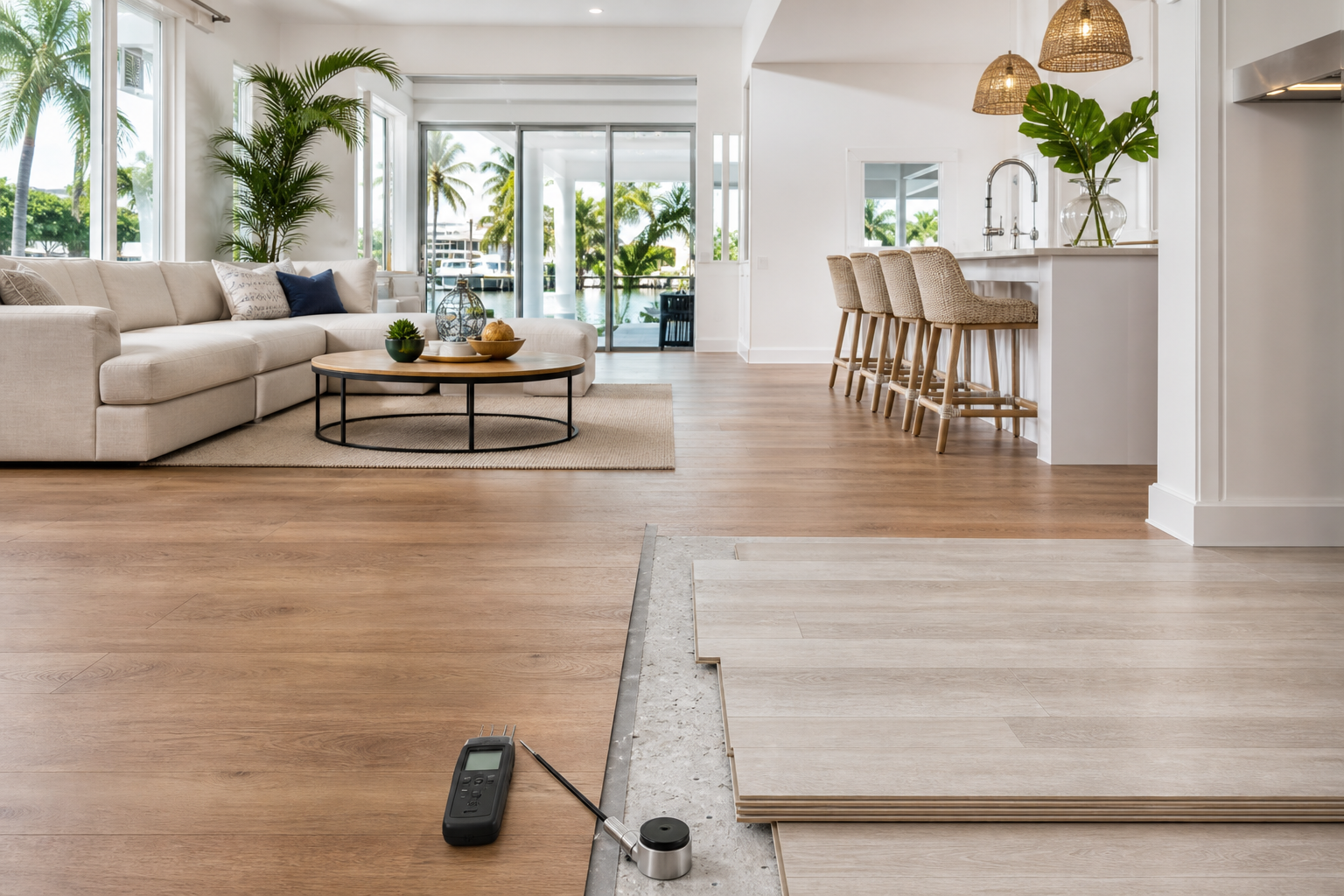
Fort Lauderdale, Miami, Davie, Hollywood, Dania Beach, and Miramar homeowners love wood-look floors, but South Florida humidity makes the material choice matter. Two options come up again and again during Danova Renovations consultations: luxury vinyl plank, usually called LVP, and laminate.
Both can make an older home look cleaner fast. Both come in warm oak, coastal beige, and modern wide-plank styles. The difference is how each floor reacts to moisture, slab conditions, daily sand, and the kind of maintenance busy homeowners actually want to do.
Why slab moisture should decide the flooring plan
Many South Florida homes sit on concrete slabs that can release moisture long after the surface looks dry. Afternoon storms, irrigation, plumbing leaks, and open sliders all add humidity to the home. If the slab is not tested and prepared, flooring can cup, separate, swell at seams, or lose warranty coverage.
Danova starts with practical checks: slab moisture, flatness, cracks, old adhesive, door clearances, baseboards, transitions, and whether the home has rooms that stay damp. This does not mean every floor needs an expensive mitigation system. It means the product should be matched to the real conditions under the planks, not just the showroom sample.
Comparison: LVP vs laminate for humid homes
| Priority | Luxury vinyl plank (LVP) | Laminate flooring |
|---|---|---|
| Moisture resistance | Waterproof or highly water-resistant depending on product. Strong choice near kitchens, entries, laundry rooms, and sliders. | Improved water-resistant lines exist, but the fiber core can swell if water reaches seams for too long. |
| Comfort and feel | Slightly softer and warmer underfoot than tile, especially with a quality underlayment. | Often feels rigid and wood-like, with a crisp click underfoot when the slab is flat. |
| Scratch and dent resistance | Good for pets, renters, and sandy shoes when the wear layer is upgraded. Heavy furniture still needs pads. | Strong surface scratch resistance, but chips and swollen edges are harder to hide. |
| Installation risk | More forgiving in humid zones, but still needs flat prep and expansion gaps. | Needs excellent moisture control and a very flat substrate to avoid joint stress. |
| Maintenance | Damp mop with a manufacturer-approved cleaner. Avoid steam and harsh chemicals. | Dry clean often, wipe spills quickly, and avoid wet mopping unless the product allows it. |
| When Danova recommends it | Most active South Florida homes that need wood-look flooring without moisture anxiety. | Dry bedrooms, upstairs spaces, or budget-conscious refreshes where water exposure is limited. |
Cost, durability, and resale value
Installed cost depends on demolition, furniture moving, slab leveling, baseboard work, product thickness, underlayment, and whether moisture mitigation is needed. LVP often costs more than entry-level laminate, but it may be the better value in a Fort Lauderdale or Miami home where wet shoes, pool traffic, and summer humidity are normal.
Laminate can still make sense. In a dry guest bedroom or home office, a quality water-resistant laminate can deliver a crisp wood look at a friendly price. The key is honesty about the room. If the space connects to a patio, laundry area, bathroom, or kitchen, LVP usually gives the homeowner a wider safety margin.
For resale, buyers care less about the label and more about whether the floor looks consistent, feels solid, and matches the rest of the renovation. A clean LVP installation with fresh baseboards and coordinated wall paint will usually outperform a cheaper laminate floor with swollen seams or noisy transitions.
Prep details that prevent callbacks
Before installing either floor, Danova checks whether old tile thinset, paint overspray, or adhesive ridges need grinding. Low spots are filled so click-lock joints do not flex. Door jambs are undercut for a built-in look, and baseboards are removed or replaced so the expansion gap is covered cleanly. We also plan transitions at bathrooms, closets, and sliders before the first plank is cut.
Color matters too. Warm natural oak, sandy beige, and light taupe floors pair well with South Florida interiors because they hide dust better than dark espresso and feel brighter under strong daylight. In Davie and Miramar family homes, slightly varied plank patterns help conceal pet traffic. In Miami condos, calmer grain usually photographs better for resale.
Frequently Asked Questions
- Is LVP always better than laminate? Not always. LVP is usually safer around moisture, but laminate can be a smart choice in dry rooms with good slab readings.
- Do waterproof floors still need moisture testing? Yes. Waterproof surfaces do not make a damp slab disappear. Testing helps protect the installation and the warranty.
- Can either floor go over existing tile? Sometimes, if the tile is bonded, flat, clean, and height transitions still work. Hollow or uneven tile should be addressed first.
- Which floor is easier to maintain with pets? Upgraded LVP usually wins because spills are less stressful, but both need felt pads, walk-off mats, and gentle cleaners.
If you are comparing LVP vs laminate for a Fort Lauderdale or Miami home, Danova Renovations can inspect the slab, explain the trade-offs, and coordinate flooring with paint, trim, and baseboards. Request a free estimate from Danova Renovations to get a moisture-smart flooring plan before you buy materials.