
Epoxy vs Polyaspartic Garage Floors in Miami
By Danova Renovations
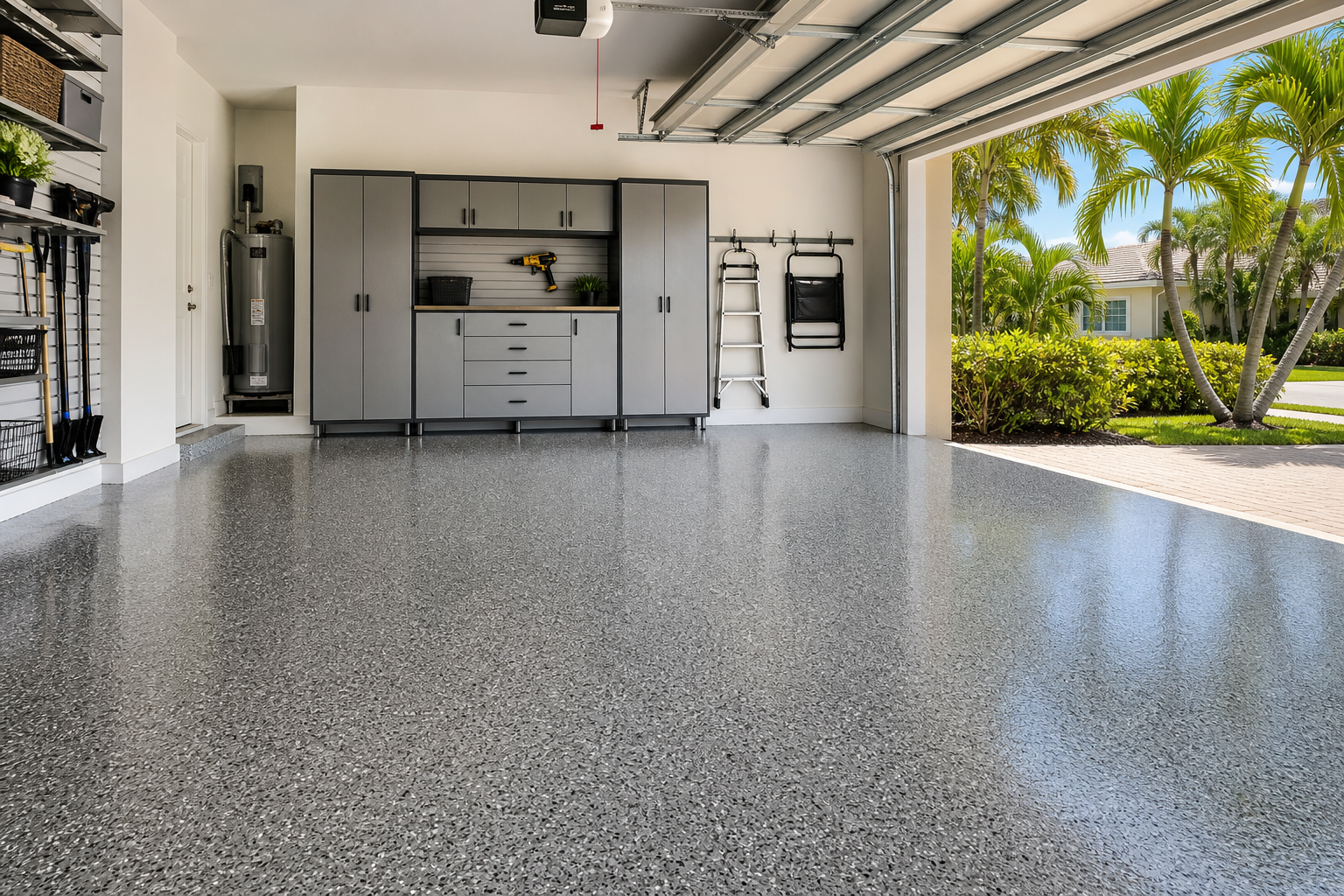
Garages in Fort Lauderdale, Miami, Davie, Hollywood, Dania Beach, and Miramar work harder than many homeowners expect. They collect beach sand, rainwater, lawn equipment, hot tires, storage bins, bikes, and weekend project messes. When the bare concrete starts looking stained or dusty, the usual question is simple: should you choose epoxy or polyaspartic for a garage floor coating?
Both can improve the look of a garage fast. The difference is how each system handles South Florida humidity, sun at the garage door, vehicle traffic, downtime, and slab prep. The right answer is not just a product label. It is the coating system, surface preparation, and maintenance plan working together.
Why South Florida garages need a climate-smart coating
Concrete may look solid, but many slabs release moisture vapor from below. Add humid air, afternoon storms, irrigation, and wet tires, and a garage floor coating can fail if the slab is not checked first. Common failure signs include peeling near the tire path, cloudy clear coats, bubbles, and flakes lifting around cracks.
Before recommending a garage floor coating, Danova Renovations looks at slab moisture, cracks, previous sealers, oil stains, door thresholds, drainage, and how much direct sun hits the floor. A coating should never be used to hide a slab problem. Good prep usually includes cleaning, mechanical surface profiling, crack repair where appropriate, and a realistic cure schedule before vehicles return.
Comparison: epoxy vs polyaspartic garage floors
| Priority | Epoxy coating | Polyaspartic coating |
|---|---|---|
| Best fit | Budget-conscious garages, workshops, and shaded spaces where longer cure time is acceptable. | Busy residential garages that need faster return to service, UV stability, and stronger hot-tire resistance. |
| Humidity concerns | Can perform well when the slab is dry and properly prepared, but cure conditions matter. | More forgiving on scheduling, but slab moisture still needs evaluation before coating. |
| UV at the garage door | Standard epoxy can amber or fade when exposed to strong sunlight. | UV-stable topcoats hold color and clarity better near open garage doors. |
| Hot tire pickup | More risk if the system is thin, under-cured, or poorly bonded. | Usually better resistance for daily-driver garages in hot weather. |
| Downtime | Often needs more time before heavy use or vehicle traffic. | Faster cure can reduce garage disruption when installed correctly. |
| When Danova recommends it | When cost control matters and the garage has limited sun, moisture, and vehicle demands. | When durability, appearance, and convenience matter more than the lowest upfront price. |
Cost, durability, and value questions
Installed cost depends on garage size, concrete condition, crack repair, moisture mitigation, coating build, flake coverage, topcoat selection, and whether old paint or sealer must be removed. A basic epoxy job can look attractive on day one, but the cheapest quote may not include the prep that keeps a coating bonded in South Florida.
Polyaspartic systems usually cost more upfront because the materials and installation timing are more demanding. For many Miami and Fort Lauderdale homeowners, the value comes from faster downtime, better color stability, and less worry about hot tires near the garage entry. In some cases, a hybrid approach makes sense: an epoxy base for bonding and build, plus a polyaspartic topcoat for UV and abrasion resistance.
Do not choose by gloss alone. Ask what surface profile will be created, how oil stains will be treated, whether moisture is a concern, when cars can return, and what cleaners are safe. Those answers matter more than a sample board.
Maintenance tips after coating
A coated garage floor is low maintenance, not no maintenance. Sweep or blow out sand before it acts like sandpaper. Wipe oil, fertilizer, pool chemicals, and paint spills promptly. Mop with a mild, pH-neutral cleaner instead of bleach, citrus degreaser, or harsh solvent. Use soft furniture pads under storage racks, and avoid dragging metal cabinets across the finish.
Color choice also affects upkeep. Full-flake gray, taupe, or coastal beige blends hide dust better than a plain high-gloss dark floor. A light texture can improve traction when rainwater blows in, while still keeping the floor easy to clean.
Frequently Asked Questions
- Is polyaspartic always better than epoxy? Not always. Polyaspartic is often better for UV, hot tires, and fast turnaround, but epoxy can be a good value in the right shaded, properly prepared garage.
- Can a coating fix cracked concrete? It can improve appearance after repair, but active cracks or moisture issues need evaluation before coating.
- How soon can I park on the new floor? It depends on the system, weather, and manufacturer guidance. Danova gives clear return-to-service instructions before the project starts.
- Will the floor be slippery? It can be if the finish is too smooth. Flake coverage and texture help balance cleanability with traction.
If you are comparing epoxy vs polyaspartic garage floors for a Fort Lauderdale or Miami home, Danova Renovations can inspect the slab, explain the trade-offs, and coordinate the coating with painting, trim, storage, or wider renovation plans. Request a free estimate from Danova Renovations to choose a garage floor system that fits your climate, schedule, and budget.