
Elastomeric vs Mineral Paint for Miami Stucco
By Danova Renovations
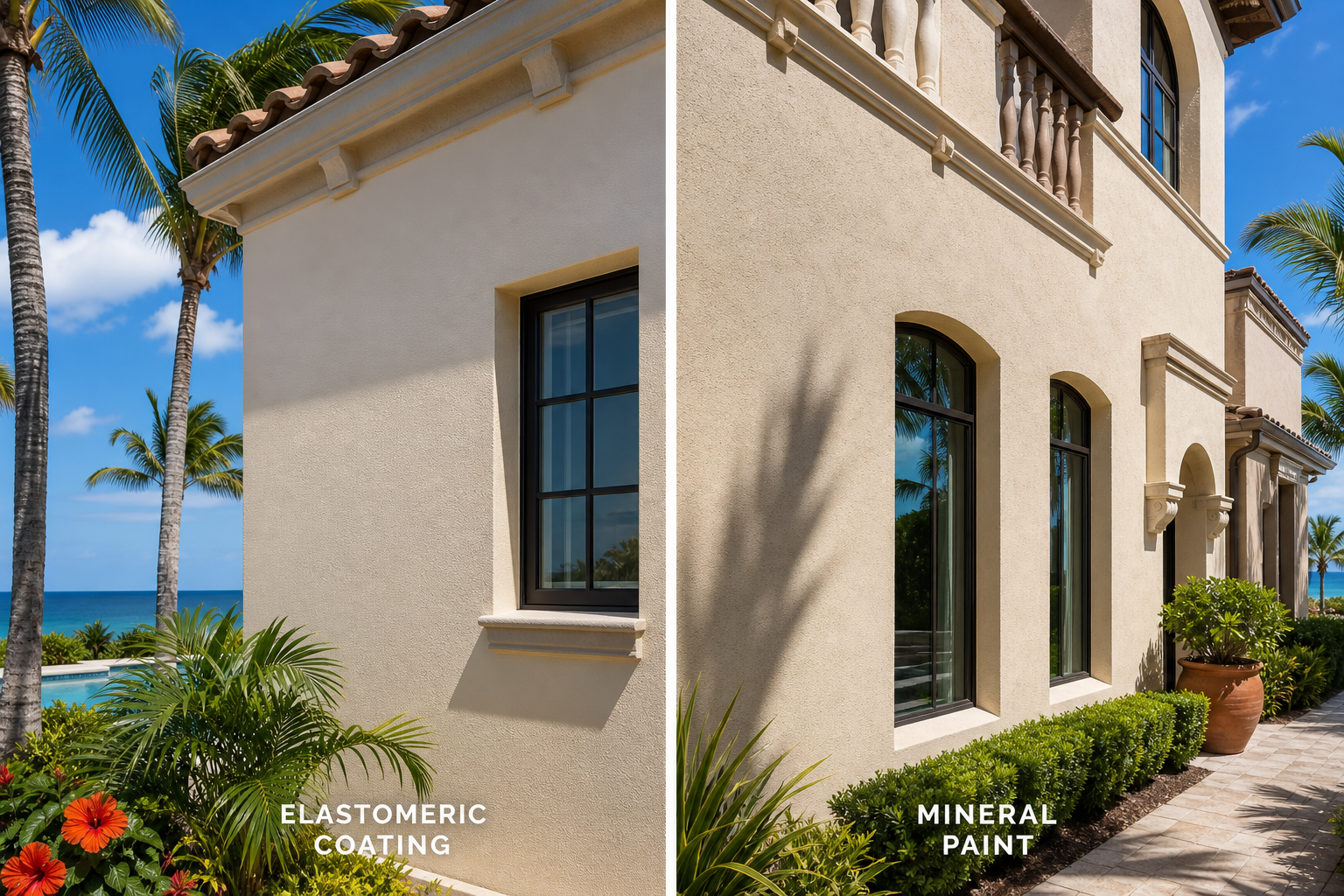
Fort Lauderdale homeowners are calling as soon as the 2026 hurricane outlook hits the news because chalking stucco, hairline cracks, and faded trim make buyers wonder if the envelope can actually keep water out. Miami Beach HOAs now ask for coating specs before granting swing-stage access. The biggest question this month is whether to reroll elastomeric paint or switch to breathable mineral coatings that let trapped vapor escape. Use this playbook to choose the chemistry that keeps your coastal exterior tight.
Why South Florida stucco repaints fail fast
- Thermal whiplash: Afternoon downpours push surface temps below 85°F, then the sun slams the wall back past 110°F. Low-grade acrylics can’t stretch and start fracturing within a season.
- Salt and carbon pollution: Atlantic breezes mix salt with exhaust along US-1, embedding grime that unsealed paints can’t shrug off.
- Improper crack prep: Filling dynamic cracks with spackle instead of elastomeric patching compounds leaves a weak seam that telegraphs through any new coating.
- Moisture trapped in block walls: Closing vents or adding foam insulation without vented cladding traps vapor behind paint films and leads to blistering.
Comparison: Elastomeric vs Mineral Paint for Miami Stucco
| Priority | Elastomeric acrylic coating | Breathable mineral (silicate) paint |
|---|---|---|
| Best for | Cracked stucco, CMU, or EIFS that needs gap-bridging and impact resistance on Broward single-family homes. | Historic masonry, dense stucco, and concrete where vapor drive is high in Miami Beach condos. |
| Moisture handling | Creates a flexible membrane that keeps rain and salt spray out but requires dry walls (below 12% moisture) before application. | Chemically bonds to mineral substrates and allows vapor to escape, reducing blistering on walls with interior foam or masonry infill. |
| Crack tolerance | Stretches up to 300% and hides hairline crazing when paired with proper patching. | Less elastic, so we pair it with mesh-reinforced basecoats before topcoating. |
| UV + color retention | Holds pigment well even on dark accent bands; needs periodic cleaning to avoid algae streaks. | Mineral pigments are fade-resistant and chalk minimally, but lighter palettes dominate due to product availability. |
| Maintenance cycle | Rinse twice a year and expect 8–10 years before a full recoat in Fort Lauderdale sun zones. | Can last 12–15 years with breathable sealer touch-ups; touch-ups blend seamlessly because the finish is matte. |
| Cost & logistics | Slightly higher labor because of thicker film build and cure checks, but materials are widely stocked in Broward supply houses. | Materials cost more upfront and require trained crews plus alkaline-resistant primers; payoff is fewer callbacks for trapped moisture. |
Danova’s coastal exterior workflow
- Moisture mapping: We scan every elevation with a pinless meter and mark hot spots on shared Google Maps photos so HOA reviewers see the data.
- Crack surgery: Structural cracks get urethane injection or mesh splices; hairline crazing is skimmed with elastomeric patch so the topcoat isn’t doing all the work.
- Salt neutralization: Pressure wash with a chloride remover, then let walls dry to spec. Skipping this step is why many DIY elastomeric jobs peel within months.
- Priming that matches the chemistry: Elastomeric goes over high-build acrylic primer; mineral systems get silicate primers that fuse to stucco and keep pH balanced.
- Detail sequencing: We start with parapets, window returns, and slab edges where leaks start, then finish broad fields with airless sprayers set for thicker mills.
- Documentation + warranty: Photo logs, wet-mil readings, and ASTM adhesion pull tests go into a packet your insurance carrier or buyer’s inspector can review.
Local planning checklist before hurricane season
- Schedule lift rentals early; Miami Beach permitting departments are already pushing September swing-stage slots to October.
- Refresh sealant at control joints and around impact windows the same week you repaint so caulk lines cure under the new coating.
- Coordinate gutter cleanouts and balcony drain checks; fresh paint won’t save you if scuppers back up mid-storm.
Frequently Asked Questions
- Do I have to strip old elastomeric first? Only if it’s delaminating. We perform adhesion tests; if the film is sound, we clean, spot-prime, and build new mills over it.
- Can mineral paint go over previously painted walls? Yes, but we sandblast chalky areas, apply a mineral bridging primer, and keep moisture below 8% before spraying.
- What about hurricane insurance discounts? Some carriers give credits when you document impact-rated openings plus maintenance records. Fresh coatings with sealed penetrations support those inspections.
- How long before rain is safe? Elastomeric systems need a 4-hour dry window above 50°F dew-point spread. Mineral paints carbonate quickly but still need 12 hours before heavy rain.
- Will dark colors overheat? We spec infrared-reflective pigments for charcoal trims so surface temps stay manageable and don’t cook sealant joints.
A smart coating plan does more than keep stucco pretty—it protects sheathing, keeps HOA letters off your door, and reassures buyers that the envelope is hurricane-ready. If you want Danova Renovations to inspect your Fort Lauderdale or Miami exterior, compare elastomeric and mineral options, and sync the work with window or balcony upgrades, request a free estimate from Danova Renovations today.