
Cool Deck vs Porcelain Pavers for Miami Lanais
By Danova Renovations
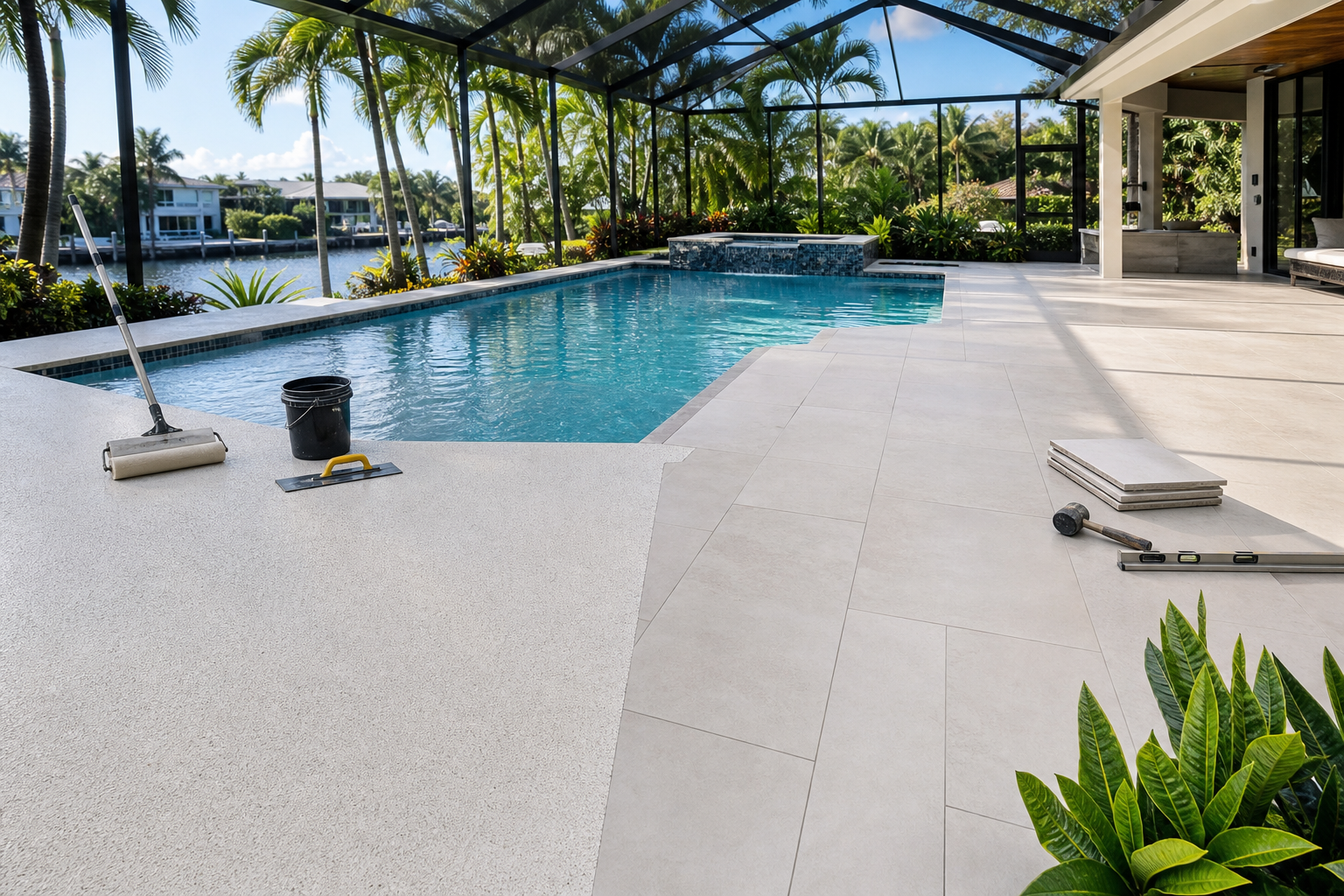
Fort Lauderdale and Miami homeowners use pool lanais almost year-round, so worn concrete around the pool becomes more than a cosmetic problem. Afternoon storms, strong sun, salt air, sunscreen, and patio furniture all punish the surface. When the deck starts looking chalky, slippery, stained, or dated, two options come up often: a spray-applied cool deck texture or a porcelain paver overlay.
Both can improve comfort and curb appeal. The best choice depends on the existing slab, drainage, door thresholds, pool coping, HOA rules, and how much maintenance the homeowner wants after the project is done.
Why South Florida pool decks need climate-smart planning
Outdoor flooring in South Florida has to do several jobs at once. It should feel reasonable under bare feet, provide traction when wet, clean up after storms, handle pool chemicals, and look good from the sliders. A dry-climate patio product may not hold up beside a humid pool in Hollywood, Dania Beach, Davie, or Miramar.
Before Danova Renovations recommends a finish, we look for puddling, hollow areas, cracks, old coatings, loose coping, screen enclosure posts, railing anchors, and transitions into the home. The surface plan should solve the real site conditions, not just cover them.
Comparison: cool deck vs porcelain paver overlays
| Priority | Cool deck spray texture | Porcelain paver overlay |
|---|---|---|
| Best fit | Existing concrete that is mostly sound and needs a cooler-looking, textured refresh without a major build-up. | Lanais where the owner wants a more finished patio look, stronger design continuity, or a premium resale presentation. |
| Comfort and heat | Light colors and textured coatings can make the deck feel more comfortable than dark bare concrete. | Light porcelain pavers can also perform well, but dark colors and direct sun need shade planning. |
| Slip resistance | Knockdown texture can improve traction when the deck is wet, especially around pool entries. | Choose outdoor-rated porcelain with a wet-area surface, then plan joints and edges carefully. |
| Thickness and thresholds | Usually adds less height, which helps near sliders, drains, and existing pool coping. | Adds more build-up, so doors, drains, step heights, and railings need closer review. |
| Maintenance | Needs gentle cleaning and periodic resealing based on exposure and product guidance. | Tile faces clean easily, but joints, edge details, and cracked units still need attention. |
| When Danova recommends it | When speed, comfort, and budget control matter and the slab is a good resurfacing candidate. | When the homeowner wants a higher-end finish and the site can handle the added height and details. |
Cost, durability, and ROI questions
Cool deck resurfacing is often the more practical upgrade when the slab is stable and the goal is a cleaner, safer-feeling pool area. It can refresh a rental property, prepare a home for sale, or make a family lanai more usable. The weak point is prep. If old coating is loose, cracks are active, or drainage is poor, a new texture can fail early.
Porcelain paver overlays usually involve more planning. The material can look beautiful, especially when it coordinates with indoor flooring, exterior paint, patio furniture, and landscape lighting. But it is not automatically better. Added height near sliders can create trip points. Poor edge detailing can trap water. A cracked or settled slab still needs attention before the pavers go down.
For ROI, Danova keeps the recommendation simple: choose the option that makes the lanai look intentional, cleans easily, and does not create inspection concerns. A modest cool deck refresh can outperform an expensive overlay if the overlay creates threshold or drainage problems. A porcelain overlay can be worth it when the home already has upgraded finishes and the pool area needs to match.
Prep details that prevent callbacks
Good installation starts with cleaning, surface profiling, crack review, and drainage planning. For cool deck, the coating needs a sound bond, compatible primer, consistent texture, and cure time before furniture returns. For porcelain pavers, the layout should account for slope, expansion, coping, screen posts, and perimeter edges before the first piece is set.
Color matters too. Light sand, warm gray, soft beige, and coastal white tones fit Fort Lauderdale and Miami homes because they look bright without making dirt the main feature. Very dark surfaces can look dramatic but may be less comfortable in direct sun.
Frequently Asked Questions
- Is cool deck cheaper than porcelain pavers? Often, yes, but the condition of the slab, crack repair, drainage, and coating removal can change the budget.
- Can porcelain pavers go over old concrete? Sometimes, if the concrete is stable, drainage works, and thresholds still meet safely.
- Which option is easier to maintain? Cool deck needs resealing over time. Porcelain tile faces are easy to clean, but joints and edges need inspection.
- Do HOA or condo rules matter? Yes. Many communities want finish samples, slip information, contractor insurance, and work-hour coordination before approval.
If you are comparing cool deck vs porcelain paver overlays for a Fort Lauderdale or Miami pool lanai, Danova Renovations can inspect the slab, explain the trade-offs, and coordinate the finish with paint, lighting, landscaping, and flooring transitions. Request a free estimate from Danova Renovations to plan a South Florida pool deck upgrade built for real weather.